Last updated 2026-08-19
TL;DR
Tent rental is short-term hire of pole or frame tents plus labor, walls, and flooring. You start with an entity, a free IRS EIN, sales tax registration if your state taxes rentals, and a fire permit when a tent exceeds 400 square feet under the International Fire Code. Add NFPA 701 flame certificates, liability insurance, and check whether your truck needs a USDOT number. Confirm forms and fees with your local fire official and state board.
What is tent rental?
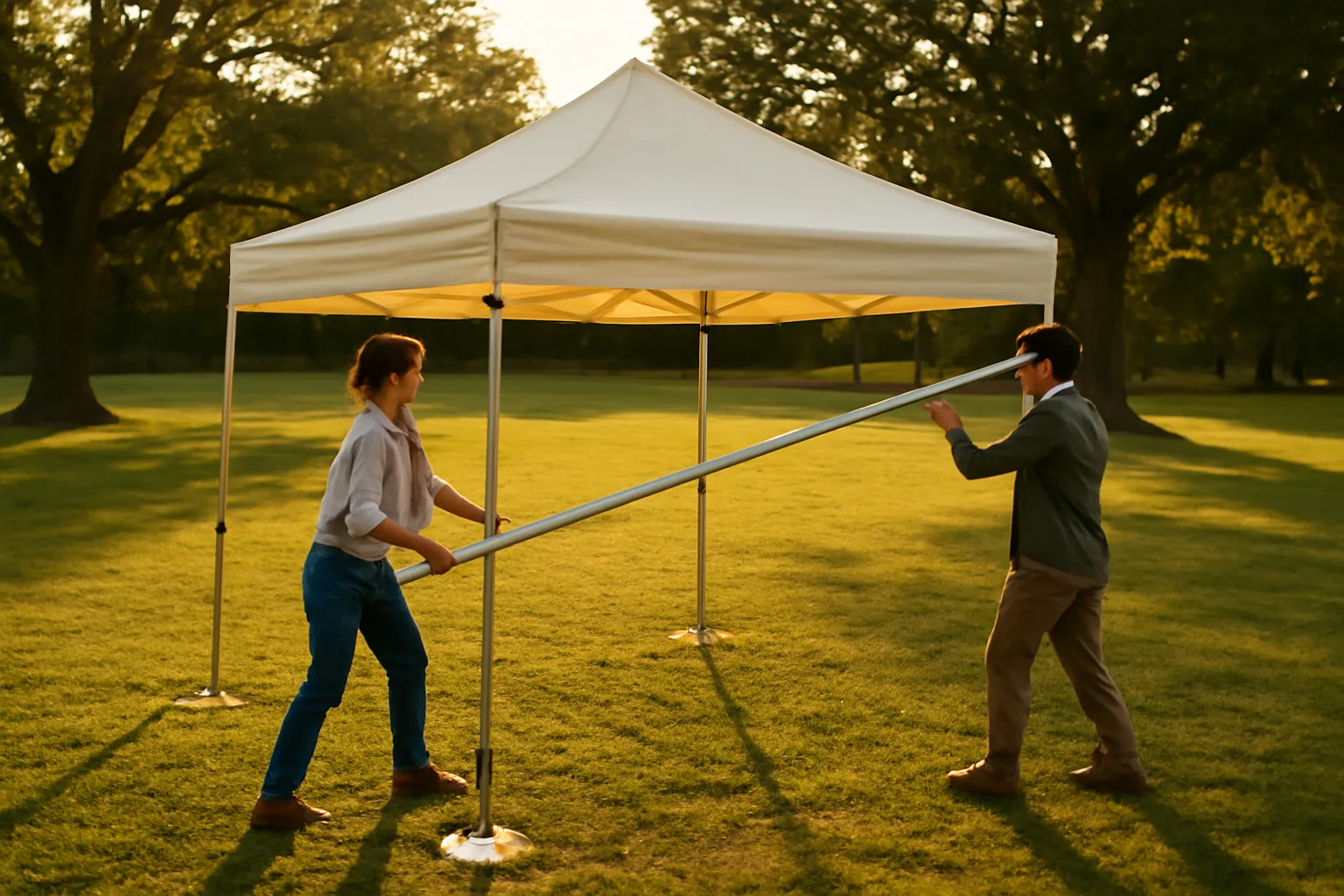
Tent rental is a service business that delivers, installs, and later strikes temporary fabric structures, then bills by the day or the weekend. The inventory is usually pole tents, frame tents, or clearspan structures, plus sidewalls, lights, stakes or ballast, and sometimes flooring. You are renting a temporary building. You are not renting a party favor.
Put a 20x40 in a city park and fire officials treat you like a temporary-structure contractor. Parks departments do too. A shop that only hands folding tables across a counter is a different trade, even if both shops share a warehouse.
The Census Bureau files a lot of this work under NAICS 532289, All Other Consumer Goods Rental. That code covers establishments that rent party supplies and similar consumer goods. [9] Some yards sit closer to general rental centers. The code matters on tax forms and on a bank packet. It does not change the fire code.
You're selling dry cover and a usable floor. That's the product. Drapes, chandeliers, and fake turf are upsell. First-year operators who buy lounge furniture before they own enough 40-foot tents usually regret the order.
What people actually hire: weekend weddings, school fairs, municipal festivals, restaurant patios, disaster overflow, and construction lunch cover. City and school work pays slower and asks for more certificates. Wedding work pays faster and argues more about grass stains. Both are tent rental if you are the one who stakes it, stands it, and owns the failure when the wind comes up.
How do you start tent rental?
You start by forming a legal entity in your state, getting a free EIN from the IRS, registering for sales tax if your state taxes rental of tangible personal property, buying or leasing a first set of tents that already carry flame certificates, and lining up insurance plus a truck. Then you bid only jobs your crew can install in daylight.
The SBA launch path starts where every sober operator starts: pick a structure, register it, get tax IDs, then get insurance. [4] An LLC is the common pick because it can separate your house from a blown-over tent, if you actually keep the formalities. Confirm formation fees with your secretary of state. Those fees change by state and by year. I will not invent them.
The IRS says it plainly: "Applying for an EIN is a free service offered by the Internal Revenue Service." [3] Use the IRS site. Paid EIN mills are a waste of money.
You do not need a national franchise. You need a dry storage bay, a truck that can carry steel bases, two people who will work Saturdays, and a working relationship with the fire marshal who covers your county. Walk the first three sites yourself. Write a one-page wind and staking rule before you take a deposit.
First jobs should be small and close. A 20x20 in a backyard teaches you more than a 40x80 you cannot staff. Collect a deposit that covers your permit time and your fuel. Put cancellation and wind stand-down language in the contract on day one. Confirm every local form. Nobody can promise you a processing time, and anyone who does is guessing.
What licenses and permits do you need to rent tents?
Most states do not issue a special tent rental license. You need a general business registration, a seller's permit or sales tax account where rentals are taxable, local occupancy permission for your yard if the city requires it, and a fire permit for the event tent when it crosses the size trigger. Confirm each of those with the state board or city clerk that actually issues the paper.
A contractor license is usually the wrong box. You are not pouring a foundation. Some cities still put tent vendors on a special event vendor list. Ask the clerk and the fire prevention bureau. Do not take a Facebook group's word for it.
Hire people and you step into federal wage rules and, in most states, workers compensation. The federal minimum wage is $7.25 an hour. [8] Many states set a higher floor. Confirm the number that applies to your crew with your state labor department before you print a hiring flyer.
Home-based storage is a zoning question, not a romance. A stack of 40-foot poles in a driveway will get you a neighbor complaint and, in a lot of towns, a code visit. Rent a cheap industrial bay before you buy a third tent. Confirm home-occupation rules with planning, not with your landlord's shrug.
When does a tent need a fire permit?
Under the 2021 International Fire Code, tents and membrane structures larger than 400 square feet need a permit and approval from the fire code official before you erect them. The code text is blunt: "Tents and membrane structures having an area in excess of 400 square feet shall not be erected, operated or maintained for any purpose without first obtaining a permit and approval from the fire code official." [1] Your town may adopt that language, amend it, or run its own fire code. Confirm the trigger with the AHJ on the job, not with a national blog.
IFC 2021 also carves a common exception for tents open on all sides. An individual open-sided tent can reach 700 square feet, with a 12-foot clearance to other tents and structures, before that particular exception stops applying. [1] Camping tents used only for recreation sit in another exception. Party rental is not camping.
Flame paper travels with the fabric. Fire officials commonly ask for a certificate showing the tent material meets NFPA 701 flame propagation performance criteria. [2] IFC Chapter 31 points permit applicants at those test methods. Keep a packet in the truck: cert, floor plan, stake or ballast plan, and the installer name.
California runs its own flame-retardant fabrics program through the Office of the State Fire Marshal. [15] Work there and you confirm current listing and labeling rules on the OSFM pages before you bid a public event. Other states just want the NFPA 701 sheet from the mill. Either way, a tent with no cert is a tent you should not sell.
What insurance do tent rental companies actually carry?
Venues and parks almost always ask for general liability with the site named as additional insured. That is the policy that responds when a guest trips a stake or a sidewall takes out a catering table. The SBA lists general liability and related coverages as part of a normal business launch, not as optional decoration. [5] Confirm limits with the venue rider. Do not invent a number and hope.
You also want inland marine or a scheduled equipment floater on the tents themselves. Auto on every truck and trailer. Workers compensation if you have employees, which most states require once you have payroll. Umbrella coverage shows up on municipal bids. I will not quote premiums. They move with claims, wind territory, and whether you install or only drop-and-go.
Read the exclusions. A surprising number of cheap policies get fussy about weather, about work over a certain height, or about tents used as assembly occupancy. If a clerk asks for a waiver of subrogation, your broker handles that form, not your cousin.
For the certificate dance and the riders parks mail you in June, use a dedicated insurance walkthrough rather than guessing from a Facebook thread. Start with tent rental guide 11 and tent rental guide 17 if you want the paper path, not a slogan.
How much money do you need to start tent rental?
Nobody has a clean national start-cost study for tent rental. Trade magazines publish round numbers that go stale the month steel and freight move. The honest method is local quotes on three tents, one truck, three months of yard rent, insurance deposits, and the state registration fee your secretary of state actually charges this year.
New commercial frame tents are manufacturer quotes in the thousands per unit, and the number swings with aluminum, vinyl, and shipping. Used inventory shows up at auction and at retiring shops. I would rather buy two clean used 20x40 frames with current flame certs than one pretty sailcloth tent I cannot replace when a forklift kisses it.
The cheap line items are still real. An EIN costs $0 through the IRS. [3] Sales tax accounts are often free to open and then become a filing chore. Insurance binders take a down payment. A box truck that crosses 10,001 pounds in interstate commerce is no longer just a truck. It can pull you into USDOT registration. [6]
What I would not fund in month one: a second warehouse, a custom neon logo wall, a franchise territory fee, or a full clearspan inventory. Those are how people run out of cash before Saturday season starts. Rent overflow storage by the month if a one-off 40x100 lands. Buy it after it has paid for itself twice.
What tents and gear should you buy first?
Buy frame tents first if your work is decks, patios, and lots where you cannot drive 40-inch stakes. Buy pole tents first if your work is open parks and you have the labor to lace and pull. Most first-year shops end up mixed. I would still start with two 20x40 frames, one 20x20, matching sidewalls, and enough steel bases or stakes to hold a wall day.
Skip the 40x100 until you have a crew that has stood three 20x40s in wind without calling you crying. Big tops eat labor and truck cube. They also attract the jobs with the pickiest fire inspectors.
Consumables matter more than Instagram inventory. Stakes, ratchet straps, base plates, sledge hammers, a puller, caution tape, and a decent walkie set keep Saturday from turning into a hardware-store run. Flame certificates should arrive with the tent, not get emailed later. If a seller cannot produce NFPA 701 documentation, walk. [2]
Lighting and drapes can wait. So can dance floor. You can subcontract flooring for a year. You cannot subcontract a missing sidewall when the bride's mother is on site.
How do wind load and staking work on rental tents?
Tents fail in wind when they are under-staked, under-ballasted, or left walled up after the crew has gone home. The engineering reference most building officials point at is ASCE 7, the standard for minimum design loads including wind. [13] Your fire or building official decides whether a given span needs a PE-stamped drawing. Confirm that. Do not guess from a Facebook photo of someone else's permit.
Ballast is not a vibe. Water barrels that look heavy on Instagram can be light for a walled frame in a gust. Manufacturer install manuals list hold-down values. Follow those or hire an engineer. A verbal "we've always done it this way" is not a wind plan.
Write a stand-down rule your crew can follow without calling you. Walls off at a stated wind speed. No installs when a warning is up. Refund language that matches the rule. Guests will still argue. Your contract has to be clearer than their Pinterest board.
Want a packaged wind-load note and stamp path instead of assembling PDFs at midnight? TentStakePath sells a $179 one-time Wind-Load + Stamp Kit. Confirm what your building official will actually accept. No kit replaces the AHJ, and nobody can promise an approval.
How should you price tent rental in year one?
Price the labor, the truck, the wear, the permit time, and the rain day you will eat. Then add margin. If your number only beats the national chain on a 40x60, you are buying the job, not selling it.
Delivery zones should be on the quote. So should sidewall, lighting, and same-day strike. Weekend weddings that run Sunday pickup are two labor days, not one. Charge them that way.
I would publish a simple weekend rate for the common sizes and a weekday rate that is actually lower. Municipal buyers like a rate sheet. Brides like a package. Both still need a site walk before you lock a number, because a hillside with no stake path is not a parking-lot install.
Do not discount to get the logo out there. Your logo on a wrinkled, understaffed tent is worse than no logo. Raise the price when the site needs a fire plan, a generator setback, or a 5 a.m. load-in. That time is real even if the vinyl looks the same in photos.
What truck and labor rules hit tent crews?
If you have employees, the Fair Labor Standards Act is in play. The federal minimum wage is $7.25 an hour, and overtime rules apply unless a real exemption does. [8] Confirm your state overlay. Seasonal Saturday help is still payroll if they are employees. Handshake cash is how people meet their state labor department the hard way.
Tent installs can look like construction. OSHA's construction fall rule requires protection when an employee is on a walking or working surface 6 feet or more above a lower level. [7] Climbing frames and working off a box-truck roof is how crews wander into that number. Train, or stay on the ground and use lifts you know how to run.
Heat takes people out faster than wind in July. OSHA's heat-exposure guidance is built for outdoor work, which is what you sell. [11] Water, shade, and a stop-work call are cheaper than an ambulance on a football field.
Trucks have their own paper. FMCSA says you need a USDOT number when you use a qualifying vehicle in interstate commerce and the vehicle hits a gross vehicle weight rating, gross combination weight rating, gross vehicle weight, or gross combination weight of 10,001 pounds or more. [6] Confirm whether your runs are interstate and what your truck actually weighs loaded. Local-only work can still trip a state DOT rule. Check that board too.
Do you charge sales tax on tent rental?
Often yes. Many states tax the rental of tangible personal property, and a tent is tangible personal property. New York's tax bulletin on the topic treats rental of tangible personal property as generally taxable, with the documented exceptions living in that bulletin, not in a vendor's guess. [10] Your state may look the same or may exempt certain event services. Confirm with your department of revenue before you print a rate card.
Labor versus rental split matters. Some states tax the tent and not the install labor if you invoice them apart and the split is real. Some tax the whole bundle. Do not invent a split to dodge tax. That is how audits go.
Keep exemption certificates when a school or church claims one. IRS Publication 334 is the Tax Guide for Small Business and is the manual sole proprietors actually use when they report income and expenses, including supplies and vehicle costs. [14] It will not tell you your state sales tax rate. That is a state form.
File on the cadence your state assigned. Late sales tax is one of the faster ways a new shop gets a lien. Calendar it like a wedding Saturday.
What paperwork do venues and parks ask for?
A certificate of insurance, additional insured wording, a flame certificate, a simple site plan, and sometimes a PE letter. Parks add a turf bond, a vehicle path, and a no-stake map over irrigation. Hotels add loading-dock rules and a union or in-house labor clause you need to read twice.
Build a raised floor or a long cable run for a public event and accessibility rules can apply. The 2010 ADA Standards are the design reference for accessible routes and related elements. [12] Read the route language before you deck a public lawn and block the only curb cut with a generator.
Keep a truck binder. Paper copies still win when the inspector's phone has no signal. Include the IFC-sized floor plan, exits if you walled a large tent, and the installer's phone number. Chapter 31 of the IFC is where a lot of those operational asks come from, even when the inspector never says the letters out loud. [1]
The insurance half of that binder is where shops stall. If you need the certificate and rider sequence spelled out, use tent rental guide 23 and tent rental guide 29 next. Those pages exist for the follow-up questions venues actually mail.
What should you skip in the first year?
Skip the franchise. Skip the second warehouse. Skip custom sabre poles and a sailcloth inventory you cannot patch on a Tuesday. Skip hiring a full-time salesperson before you have a crew that can stand two tents on the same Saturday without you on site.
Skip promising a wind rating you cannot show. Skip the phrase "we never cancel." You will cancel, or you will own a wreck. Put the stand-down rule in the contract and keep it.
A cheap policy that excludes weather and assembly use is a waste of money. So is a shiny website that cannot take a deposit. So is buying lighting SKUs because a Pinterest account told you that is how you look premium. Premium is a tent that is tight, clean, and still standing at speeches.
TentStakePath is an independent publisher, not a law firm and not a service company. Want the kit path after you have read the fire and tax paper? It lives at /start. Confirm every fee, form, and stamp requirement with the board that signs it. No one here can promise you an approval or a timeline.
Frequently asked questions
What is tent rental?
Tent rental is the short-term hire of pole, frame, or clearspan tents plus the labor to deliver, install, and strike them. You are renting a temporary structure, often with walls and flooring. Fire officials and parks treat that differently from handing out tables. Most of the work files under consumer goods or party supply rental for tax coding, but the job on site is a temporary building.
How do you start tent rental?
Form an entity with your state, get a free IRS EIN, register for sales tax if your state taxes property rentals, buy tents that already have NFPA 701 flame certificates, and bind liability plus auto insurance. Add a truck and a written wind rule. Bid only what your crew can install in daylight. Confirm every local fee and form with the clerk and the fire official. Nobody can promise processing time.
Do I need a contractor license to rent tents?
Usually no. Tent rental is not permanent construction. You still need business registration, tax accounts, and event-level fire permits when the tent crosses the local size trigger. A few cities put special event vendors on a separate list. Confirm with the city clerk and the fire prevention bureau. Do not treat a social media thread as a license opinion.
How big can a tent be without a fire permit?
The 2021 International Fire Code requires a permit for tents and membrane structures over 400 square feet, with a common exception that can allow an open-sided tent up to 700 square feet if clearance rules are met. Your city may adopt, amend, or ignore that language. Ask the AHJ for the job. Camping-only exceptions do not cover party rental.
What NAICS code is tent rental?
Many party and tent rental shops sit in NAICS 532289, All Other Consumer Goods Rental, which the Census Bureau describes as including party supplies and similar consumer goods rentals. Some yards fit general rental centers better. Use the code your accountant and your bank application agree on. It does not replace fire code or sales tax rules.
Do I need a PE stamp for party tents?
Sometimes. Building or fire officials often want an engineer when the span is large, the site is exposed, or local amendments point at ASCE 7 wind loads. A backyard 20x20 rarely triggers that. A walled clearspan on a rooftop often does. Confirm with the official who will sign the permit. A kit is not an approval.
Can I run tent rental from my house?
Zoning decides that, not your garage size. Poles, bases, and Saturday truck traffic get neighbor complaints and code visits in a lot of towns. A cheap industrial bay is usually the cleaner first-year move. Confirm home-occupation and outdoor storage rules with planning before you stack inventory in a driveway.
How many tents do you need to start?
Enough to take two jobs on the same Saturday without borrowing. For most new shops that is two 20x40s and one smaller frame or pole, with matching walls and hold-downs. One lonely 20x20 makes you a hobbyist with insurance bills. A full clearspan line in month one ties up cash you need for labor and the truck.
What is NFPA 701 for tents?
NFPA 701 is the flame propagation test standard fire officials cite for tent and membrane fabrics. Permit packets commonly ask for a certificate that the material met Test Method 1 or Test Method 2, as applicable. Buy tents that arrive with that paper. California may also point you at its State Fire Marshal flame-retardant program. Confirm the local ask.
Do I need a USDOT number for a box truck?
You may, if you run interstate and the vehicle hits 10,001 pounds on the FMCSA weight tests (GVWR, GCWR, GVW, or GCW). A cub van under that line is a different story. Intrastate work can still trigger a state DOT number. Weigh the truck loaded and read the FMCSA page, then confirm with your state motor carrier desk.
Are tent rentals taxable?
In many states, yes, because a tent is tangible personal property and those rentals are taxable. New York's tax bulletin is a clear example of that treatment, with listed exceptions. Labor may be taxed differently if you invoice it separately and the state allows the split. Get the rule from your department of revenue before you print prices.
Do pole tents or frame tents sell better?
It depends on the ground. Pole tents win on open parks where long stakes are legal and you have the labor to pull them tight. Frame tents win on decks, pavers, and lots that ban stakes. Most first-year shops need frames earlier than they think. I would not pick a whole inventory based on which one photographs nicer.
Do I need workers compensation for seasonal help?
If they are employees, most states want workers compensation once you have payroll, seasonal or not. Calling Saturday labor contractors does not make it true if you set their hours and run their install. Confirm the threshold with your state workers compensation board and put people on the policy before the first raise. A COI from a labor company is the other clean path.
Sources
- ICC International Fire Code 2021, Chapter 31: IFC 2021 requires a permit for tents and membrane structures over 400 square feet, with a common open-sided exception up to 700 square feet and a 12 foot clearance condition.
- NFPA 701 Standard for Fire Tests for Flame Propagation of Textiles and Films: NFPA 701 is the flame propagation performance standard fire officials use for tent and membrane fabrics.
- IRS Apply for an Employer Identification Number (EIN) Online: Applying for an EIN is a free service offered by the Internal Revenue Service.
- U.S. Small Business Administration, Choose a business structure: SBA launch guidance starts with choosing a legal structure and registering the business before operating.
- U.S. Small Business Administration, Get business insurance: SBA treats general liability and related policies as part of launching a business.
- FMCSA, Do I need a USDOT number?: A USDOT number is required for qualifying interstate commercial vehicles at 10,001 pounds or more on the listed weight tests.
- OSHA 29 CFR 1926.501 Duty to have fall protection: Construction fall protection is required at 6 feet or more above a lower level on walking or working surfaces.
- U.S. Department of Labor, Minimum wage: The federal minimum wage is $7.25 per hour under the Fair Labor Standards Act.
- U.S. Census Bureau, NAICS 532289 All Other Consumer Goods Rental (2022): NAICS 532289 includes establishments that rent party supplies and similar consumer goods.
- OSHA, Heat exposure: OSHA publishes heat-exposure guidance for outdoor work, which covers tent installation labor.
- U.S. Department of Justice, 2010 ADA Standards for Accessible Design: The 2010 ADA Standards set accessible route and related design rules that can apply to public event layouts.
- American Society of Civil Engineers, ASCE 7: ASCE 7 is the minimum design loads standard, including wind, that engineers and officials use for structures.
- IRS Publication 334, Tax Guide for Small Business: Publication 334 is the IRS tax guide sole proprietors use to report small business income and expenses.
- California Office of the State Fire Marshal, Flame Retardant Chemicals and Fabrics: California's State Fire Marshal runs a flame-retardant chemicals and fabrics program that affects tent materials used in that state.