Last updated 2026-08-19
TL;DR
Tent rental is a local delivery and install business for temporary membrane structures at events. You start with an entity, a free IRS EIN, flame-certified inventory, and a fire permit check once a tent passes 400 square feet under the International Fire Code. Add insurance, an anchoring plan, and a city license. Confirm fees with your fire marshal. No national tent-rental license exists.
What is tent rental?
Tent rental is a local delivery, install, and strike business for temporary membrane structures at weddings, festivals, campuses, and job sites. You own the tents. You put them up so they stay put. You take them down. The customer is buying standing square footage and a crew that actually shows up.
The U.S. Census Bureau places much of this work in NAICS 532289, All Other Consumer Goods Rental. Shops that mix tables, tools, and tents sometimes sit in 532310, General Rental Centers. [11] That code does not give you a license. It just tells you how statisticians lump the work.
This is not camping retail. A backyard dome from a big-box aisle is a consumer product. An event tent is a temporary building in the eyes of a fire marshal. Most of the paper you will fight lives in fire code, often International Fire Code Chapter 31, not in some national "tent rental card." [1]
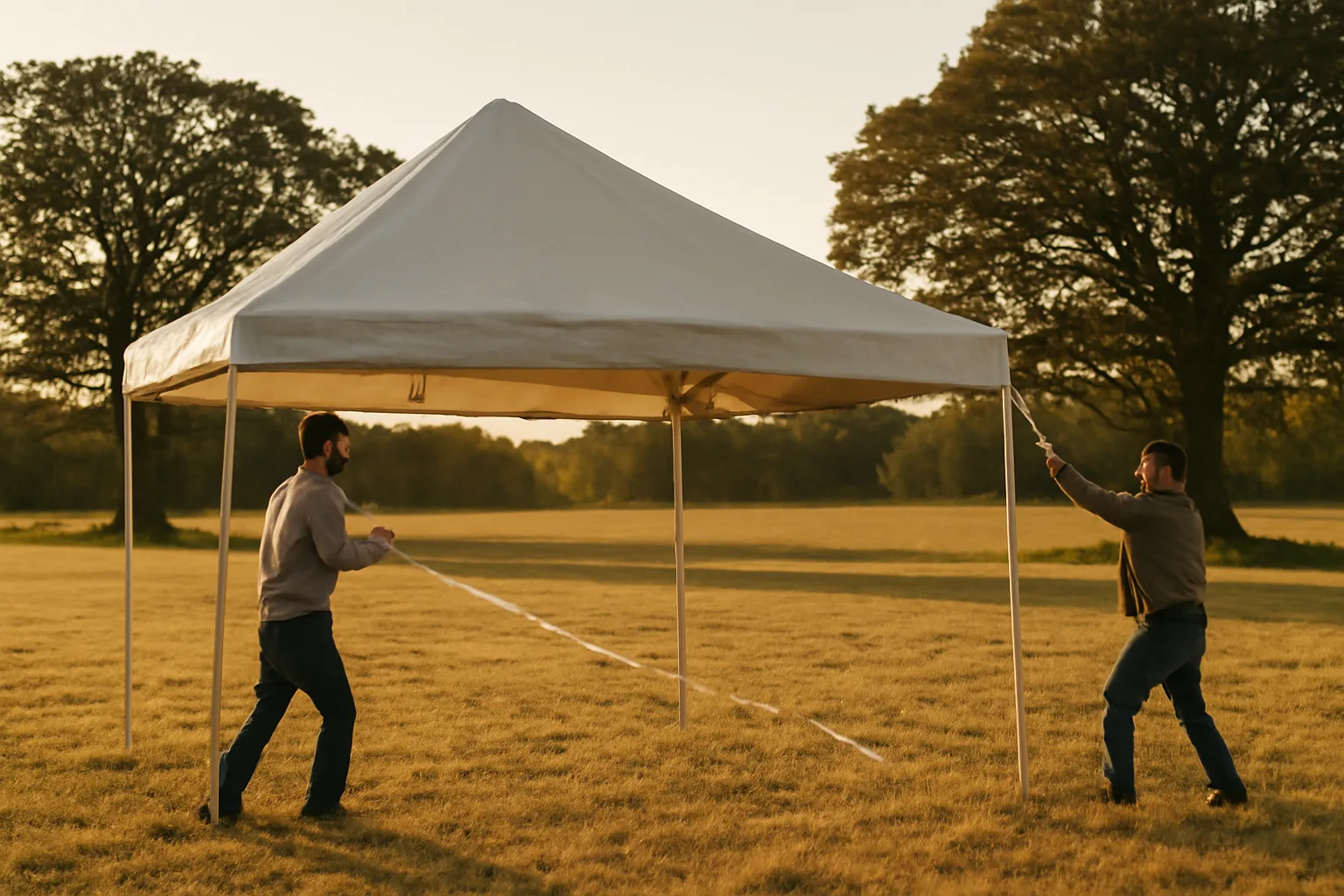
The structures you will actually see are pole tents (center poles, stakes take the load), frame tents (aluminum or steel, can sit on decks or asphalt with weights), and larger clearspan structures. Sailcloth is a fabric choice. It is not a different industry.
Add-ons pay. Sidewalls, liners, lighting, HVAC, and flooring often carry better margins than the lid. I would still keep year one inventory boring. Fancy clearspans eat cash and need heavier engineering.
If you hate weather, mud, and 5 a.m. load-outs, stop here. The work is physical. The liability is real. Treat the tent like a building that has to come down on Monday and you stay out of the dumb kind of trouble.
How do you start tent rental?
You start tent rental by forming a business, getting a free IRS EIN, binding insurance that covers erection and collapse, buying flame-certified tents, and asking your fire marshal which square footage triggers a permit. Then you take jobs that fit those tents. That is the path. Everything else is decoration.
The U.S. Small Business Administration maps the generic start sequence (entity, licenses, tax ID, finance) in its 10-step guide. [6] Use it as a checklist. It is not tent-specific law.
Here is the order I would run, and the order I see people skip right before a Saturday shutdown.
Form the entity first. An LLC is what most small shops use. I am not your lawyer. Pay a real one for the operating agreement if you have a partner.
Get the EIN online from the IRS. It costs nothing. [4] Banks want it. Insurers want it.
Call the city or county business-license desk. Then call the fire marshal with your actual tent sizes. Ask about the 400 square foot rule and any local amendment. Write down the name of the person who answered.
Bind liability before the first stake hits dirt. Ask the broker to put tent installation and collapse on the form in plain language.
Buy two or three workhorse frames with current flame certificates. Photograph the labels. Do not lease a showroom. Do not wrap a van on day one. Those are ego costs.
Do not buy a 40x60 because a forum said it prints money. Buy what your market already books, usually a 20x20 or 20x30 frame and a 20x40, plus walls. Then stop.
Do you need a fire permit to rent tents?
Most U.S. jobs need a fire permit once the tent is larger than 400 square feet, unless your jurisdiction wrote a different number. The 2021 International Fire Code states: "Tents and membrane structures having an area in excess of 400 square feet shall not be erected, operated or maintained for any purpose without first obtaining a permit and approval from the fire code official." [1]
Print that sentence. Keep it in the truck. Local amendments still win. Some cities use a lower trigger. Some adopt a later IFC edition. Confirm the adopted code year with the authority having jurisdiction.
IFC Chapter 31 also carves exceptions. Open-sided tents can sit under a 700 square foot individual-area exception if they meet clearance and aggregate-area rules, including a 12-foot separation in the model text. Recreational camping tents and some funeral tents are carved out too. Read the exception. Do not quote a Facebook version of it to a marshal.
The permit is often the customer's site permit. You still lose the weekend if your packet is wrong. I treat permit-ready drawings, flame certs, and an anchoring plan as my job, even when the contract says the client "handles permits."
Cooking, heaters, electrical, and enclosed walls change the review. Chapter 31 gets picky on those. [1] IBC Chapter 31 covers membrane structures when the building official is in the room instead of, or next to, the fire official. [2]
What licenses and tax IDs come before the first job?
Before the first paid install you want an entity, an EIN, a local business license, sales-tax registration if your state taxes rental, and a written answer on contractor licensing. There is no federal tent-rental license.
The IRS issues EINs online at no charge for responsible parties who need one. [4] Get it before you open the bank account.
The SBA is direct about the rest: "The licenses and permits you need from the federal government depend on what your business does and where you do it." [5] Most tent shops live in state and city paper, not a federal permit stack.
Sales tax on tent rental is a state question. Some states tax the rental of tangible property. Some split labor from the tent. Get the department of revenue rule in writing. Do not copy a competitor's invoice habit.
Contractor licensing is the sleeper. A few states treat tent erection as construction once the contract passes a dollar amount. Others never do. I will not invent a list because boards change statutes. Open your state page and call them. If you work those markets, start with tent rental board in california or tent rental board in florida.
If you will hire, federal wage-and-hour rules apply. The federal minimum wage under the FLSA is $7.25 an hour. Many states set a higher floor. Confirm yours. [10]
How much money does a first-year shop actually need?
Nobody publishes a clean national capital figure for tent rental startups. Census industry data mixes us with a pile of other rental goods. [11] The honest answer is this: enough to buy two or three certified tents, a way to haul them, deposits on insurance, and three quiet months of truck and storage costs.
IRS Publication 535 says: "You can elect to deduct up to $5,000 of business start-up and $5,000 of organizational costs paid or incurred after October 22, 2004." The $5,000 write-off shrinks once total start-up costs exceed $50,000. Remaining costs are amortized. [3] That is tax treatment, not a budget.
I would not spend money on a custom logo suite, a wrapped van, or a giant clearspan in month one. That is how people go broke owning vinyl.
A working first kit looks like this in the real used market. Prices move. Get three quotes.
| Item | What I see quoted | Where the uncertainty comes from |
|---|---|---|
| 20x20 used frame | often the low thousands | condition and cert age swing this hard |
| 20x40 used frame | often the mid thousands | freight can exceed the tent |
| New commercial frame | widely higher than used | manufacturer, wind rating, lead time |
| Stakes, ratchets, bases | hundreds to low thousands | soil jobs vs water-barrel asphalt |
| Storage and fuel, one quarter | local | city rates dominate |
If a seller cannot produce a current flame certificate, walk. A cheap tent with a dead cert is not cheap. Keep receipts in one folder. Publication 535 is easier if you can show what you spent. [3]
What tents should you buy first?
Buy used commercial frames in 20x20, 20x30, or 20x40 with readable NFPA 701 labels and a certificate you can email tonight. That inventory covers most first-year backyard and small-corporate work. Pole tents are fine if your sites are open soil and you like staking. They are a pain on urban asphalt.
Skip sailcloth, giant clearspans, and imported "heavy duty" marketplace vinyl until you have repeat clients. Those products need better engineering, better crews, and a harder insurance conversation.
NFPA 701 is the flame-propagation test method fire officials keep asking for on event fabrics. [12] A hang tag that says "fire resistant" with no test method is junk.
California is stricter on the paperwork trail. The State Fire Marshal runs a flame-retardant chemicals and fabrics program, and many AHJs there want a California certificate, not only a generic 701 letter. [13] Confirm before you roll a tent across that state line.
I like frames you can re-part. Proprietary rafters that only one dealer stocks will park a tent for a month. That is a wasted Saturday.
What paper do inspectors ask for on the grass?
Inspectors ask for the permit, the flame certificates, a site plan, and an anchoring or ballast plan. Some ask for occupant load, exit widths, no-smoking signs, and a weather decision rule. Have the packet in a dry folder, not on a dead phone.
IFC Chapter 31 is where those field questions come from in IFC states. [1] IBC Chapter 31 shows up when someone decides your tent is a membrane structure under the building code. [2]
Bring the same packet every time. Floor plan with exits. Tent size and manufacturer. Flame cert matching the serials on site. Stake or weight schedule. Generator location. Any heater or cooking note. If you cook under canvas, expect a harder no.
Do not argue code from memory. Hand them the page.
If the site is a public event, ADA access can enter the conversation for routes and ramps onto flooring. The 2010 ADA Standards are the federal design reference. [14] How a local official applies them to a weekend tent is uneven. Ask early on campus and municipal jobs. Guessing on a ramp the morning of the event is how you eat the day.
How do wind load and stakes work on real sites?
Wind is how tents become claims. You need a written wind rating for each tent, a stake or ballast schedule that matches the soil or deck, and a call-off number you will actually use. "It looks fine" is not a method.
Engineers use ASCE 7 for wind loads. Fire and building officials often want a PE-stamped calculation for larger structures or for any install that looks nonstandard (gravel bar, rooftop, water barrels on a windy ridge). I will not quote a wind speed here. The number is site-specific.
If you want a packaged wind-load worksheet and stamp path instead of hiring a PE from a blank page on every frame size, TentStakePath sells a $179 one-time Wind-Load + Stamp Kit. Still have the engineer of record own anything a marshal will file. Local amendments beat a generic sheet.
Water barrels fail when people undercount them. Asphalt jobs need more weight than grass jobs, not less. Measure soil. A stake that pulls by hand at 18 inches is not a stake.
Write the weather abort into the contract. If you do not have the right to delay for wind, you will be the one holding a ridge pole because the planner already posted the timeline.
What insurance is non-negotiable?
General liability that expressly covers tent erection, collapse, and bodily injury on the install site is non-negotiable. Inland marine or equipment coverage for tents in storage and on the truck is the second must. Auto on every vehicle that hauls. Workers' compensation once you have employees, per your state.
I do not have a trustworthy national premium series for tent shops. Brokers price this on tent size, height, whether you do clearspans, and your loss history. Anyone quoting a blog number is guessing. Confirm with a broker who already writes event rental.
Ask the carrier if they exclude "temporary structures" in a way that swallows tents. Read the form. A cheap policy with a hidden exclusion is not cheap.
Name additional insureds the way venues ask. Do not sign a contract that makes you responsible for the venue's weather decisions. Photograph every install before guests arrive. That photo set is the claim file you hope you never open.
What safety rules hit your install crew?
Your crew works outside, on stakes, poles, and sometimes lifts. Heat, hands, and falling parts are the daily risks. OSHA's heat program exists because outdoor workers get sick. Build water, shade, and stop-work into the load-out, not onto a poster. [8]
When the job looks like construction (it often does), OSHA's construction PPE rule at 29 CFR 1926.95 requires appropriate protective equipment. Gloves, hard hats on frame raises, and eye protection are the boring minimum. [9]
Federal wage law still applies in the yard at 4 a.m. The FLSA federal floor is $7.25 an hour. Overtime rules apply unless a real exemption does. State law may be stricter. [10]
I would not put new helpers on a center pole in wind. Train on a calm weekday on your own grass. Pay them for that day.
If the truck and trailer hit 10,001 pounds and you cross state lines, FMCSA says you likely need a USDOT number. Many purely in-state operators still need state DOT credentials. Confirm before you take a job two states over. [7]
How should you price a first-year tent job?
Price the install, the truck, the permit packet, and the weather risk. Then price the vinyl. New operators invert that and race to the lowest 20x20 number in town. That is how you work Saturdays for free.
I do not have a national rate card that is honest. Metro weekend frames go higher than rural weekday church tents. If a competitor is far under everyone else, they are skipping insurance, skipping ballast, or about to disappear. Nobody has good public margin data on this niche. Census rental figures mix too many products to use as your price list. [11]
Charge travel from the yard, not from the client's optimistic map pin. Charge for Monday pickup as a real labor event. Charge a weather delay fee or you will eat crew hours.
Put a damage waiver in writing. Tape, knives, and dumb heater placement are normal. Photograph the empty tent and the strike. Keep those photos with the flame certs.
Which state board do you call before you advertise?
Call the fire marshal who owns the cities you will work, the city business-license desk, the state department of revenue, and, if your contract sizes warrant it, the contractor licensing board. Do that before you run ads. A cease-and-desist on week three is a stupid way to learn the org chart.
There is no single "tent rental board" in most states. You are stitching fire, tax, and sometimes contractor paper. We keep state-by-state starting points so you are not guessing the URL on a Friday. If you work those markets, use tent rental board in arizona, tent rental board in colorado, tent rental board in georgia, tent rental board in alabama, tent rental board in connecticut, and tent rental board in idaho, plus the California and Florida pages already mentioned.
Confirm every fee with the board. I will not invent a current fee, a quota, or a processing time. Those change. A blog that fakes them is why people show up with the wrong check.
If you want the wind-load kit and the start checklist after you have read the code pages yourself, it lives at /start. TentStakePath is an independent publisher, not a law firm and not a service company. Use a lawyer and an engineer when the stamp matters.
Frequently asked questions
What is tent rental?
Tent rental is a local service that delivers, installs, and strikes temporary membrane structures for events and some job sites. You are selling standing square footage plus a crew, not a weekend party favor. Fire officials usually treat the tent as a temporary building under IFC Chapter 31 or a state fire code, so permits and flame certificates matter as much as the vinyl.
How do you start tent rental?
Form an entity, get a free IRS EIN, bind liability that names tent erection and collapse, buy flame-certified frames you can actually staff, and ask your fire marshal which size needs a permit. Then take jobs that fit that inventory. Skip the showroom and the giant clearspan until cash and paper are boringly in order.
What size tent needs a fire permit?
Under the 2021 International Fire Code, tents and membrane structures larger than 400 square feet generally need a permit and fire official approval. Open-sided tents can qualify for a 700 square foot exception if they meet clearance and aggregate-area rules in the model text. Your city may have amended that number. Confirm the adopted code year with the AHJ.
Do I need NFPA 701 certificates?
Yes if you want to get through a normal fire inspection. NFPA 701 is the flame-propagation test method officials keep requesting for event fabrics. A hang tag that only says fire resistant, with no test method and no matching serial, is a shutdown waiting to happen. California often wants its own State Fire Marshal fabric paperwork on top.
Do I need a contractor license to rent tents?
It depends on the state and the contract size. Some contractor boards treat tent erection as construction above a dollar threshold. Others never pull tents into that statute. There is no national rule. Call the contractor board and the fire marshal before you advertise. Confirm any fee with them. Do not copy a forum answer.
Can I start tent rental from home?
Often yes for the office and a small inventory, if zoning and the HOA allow commercial storage and if your insurer will write the location. You still need the entity, EIN, local business license, and a legal place to dry and fold wet vinyl. A cheap storage unit beats a neighbor complaint after the first storm.
What truck do I need for tent rental?
Enough payload for the frames, walls, and steel you actually own, with legal tie-downs. Many first-year shops start with a heavy pickup and a trailer. If you run interstate and the combination hits 10,001 pounds GVWR, FMCSA likely wants a USDOT number. Confirm in-state DOT rules even if you never cross a line.
Do I need a PE stamp for every tent?
No. Small, standard frames on ordinary grass often go up on manufacturer ratings plus the fire permit packet. Larger structures, odd sites, rooftops, and heavy ballast jobs are where officials ask for a PE-stamped wind and anchoring calculation. Ask the marshal before you bid. I will not invent a size cutoff that every city uses.
How long does a fire permit take?
It varies by authority having jurisdiction, season, and whether your packet is complete. Some offices turn a clean small-tent packet around quickly. Campus, downtown, and festival sites can take much longer. Confirm timing with the fire official on that job. Nobody should publish a fake national processing time.
What NAICS code is tent rental?
Many shops sit in NAICS 532289, All Other Consumer Goods Rental. Mixed yards that rent tools and party goods sometimes use 532310, General Rental Centers. Use the code your accountant and insurer agree on. It does not replace a fire permit or a city business license.
Is tent rental profitable in year one?
Some shops make it. Plenty do not. Nobody has good public data on independent tent-rental margins. Census and BLS rental numbers mix many products, so they are a weak proxy. Year one profit usually comes from boring frames, tight labor, and saying no to underballasted wind jobs, not from owning the biggest lid in the county.
Do employees need OSHA training?
If you have employees, you owe them a workplace that meets OSHA rules. Heat, PPE, and (when the work is construction-like) 29 CFR 1926.95 are the ones that show up on tent sites. There is no single federal "tent installer card." Train on your gear, pay for the practice day, and follow your state consultation program if you want a second set of eyes.
Can I rent tents without a warehouse?
Yes for a season or two if you have dry, secure storage and a clean fold-out space. Vinyl that stays wet will mildew and fail inspection later. A climate-controlled unit is nicer. A dry unit you can actually drive a trailer to is enough. Skip the retail showroom until the calendar is full.
What flame rules apply in California?
California's State Fire Marshal runs a flame-retardant chemicals and fabrics program. Many local fire officials there want a current California certificate on the fabric, not only a generic NFPA 701 letter from another state. Confirm with OSFM and the AHJ on the job before you haul inventory in. Do not assume a 701 tag is enough.
Sources
- ICC International Fire Code 2021, Chapter 31 Tents and Other Membrane Structures: IFC 3103.2 requires a permit for tents and membrane structures larger than 400 square feet, with listed exceptions including certain open-sided 700 square foot tents.
- ICC International Building Code 2021, Chapter 31 Special Construction: IBC Chapter 31 is the building-code chapter that addresses membrane structures when a building official is involved.
- IRS Publication 535, Business Expenses: Taxpayers may elect to deduct up to $5,000 of business start-up costs, reduced when total start-up costs exceed $50,000, with remaining costs amortized.
- IRS Apply for an Employer Identification Number (EIN) Online: The IRS issues EINs online at no charge to eligible responsible parties.
- U.S. Small Business Administration, Apply for licenses and permits: SBA states federal licenses and permits depend on what the business does and where it operates.
- U.S. Small Business Administration, 10 steps to start your business: SBA outlines a generic startup sequence covering entity, tax ID, licenses, and finance.
- FMCSA, Do I need a USDOT number: A USDOT number is required for many interstate commercial vehicles at 10,001 pounds GVWR or GCWR.
- OSHA, Heat exposure: OSHA identifies outdoor heat as a workplace hazard and publishes heat-exposure guidance for employers.
- OSHA 29 CFR 1926.95 Criteria for personal protective equipment: Construction employees must be provided appropriate PPE and required to use it.
- U.S. Department of Labor Wage and Hour Division, Minimum wage: The federal FLSA minimum wage is $7.25 per hour.
- U.S. Census Bureau, NAICS 532289 All Other Consumer Goods Rental (2022): NAICS 532289 covers establishments primarily engaged in renting consumer goods outside several listed exceptions.
- NFPA 701 Standard Methods of Fire Tests for Flame Propagation of Textiles and Films: NFPA 701 is the standard fire-test method used for flame propagation of textiles and films, including event fabrics.
- CAL FIRE Office of the State Fire Marshal, Flame Retardant Chemicals and Fabrics program: California OSFM administers the flame-retardant chemicals and fabrics program that event fabrics in the state often must satisfy.
- U.S. Department of Justice, 2010 ADA Standards for Accessible Design: The 2010 ADA Standards are the federal accessibility design reference that can affect routes and ramps at public events.