Last updated 2026-08-19
TL;DR
Tent rental is the short-term hire of frame, pole, or clearspan tents plus sidewalls, flooring, and labor. You start by forming an entity, getting a free IRS EIN, checking city and fire permits for tents over 400 square feet, buying insurance, and confirming every stamp with the local fire official. No single national license exists. Paper is local. Buy inventory only after the permit path is clear.
What is tent rental?
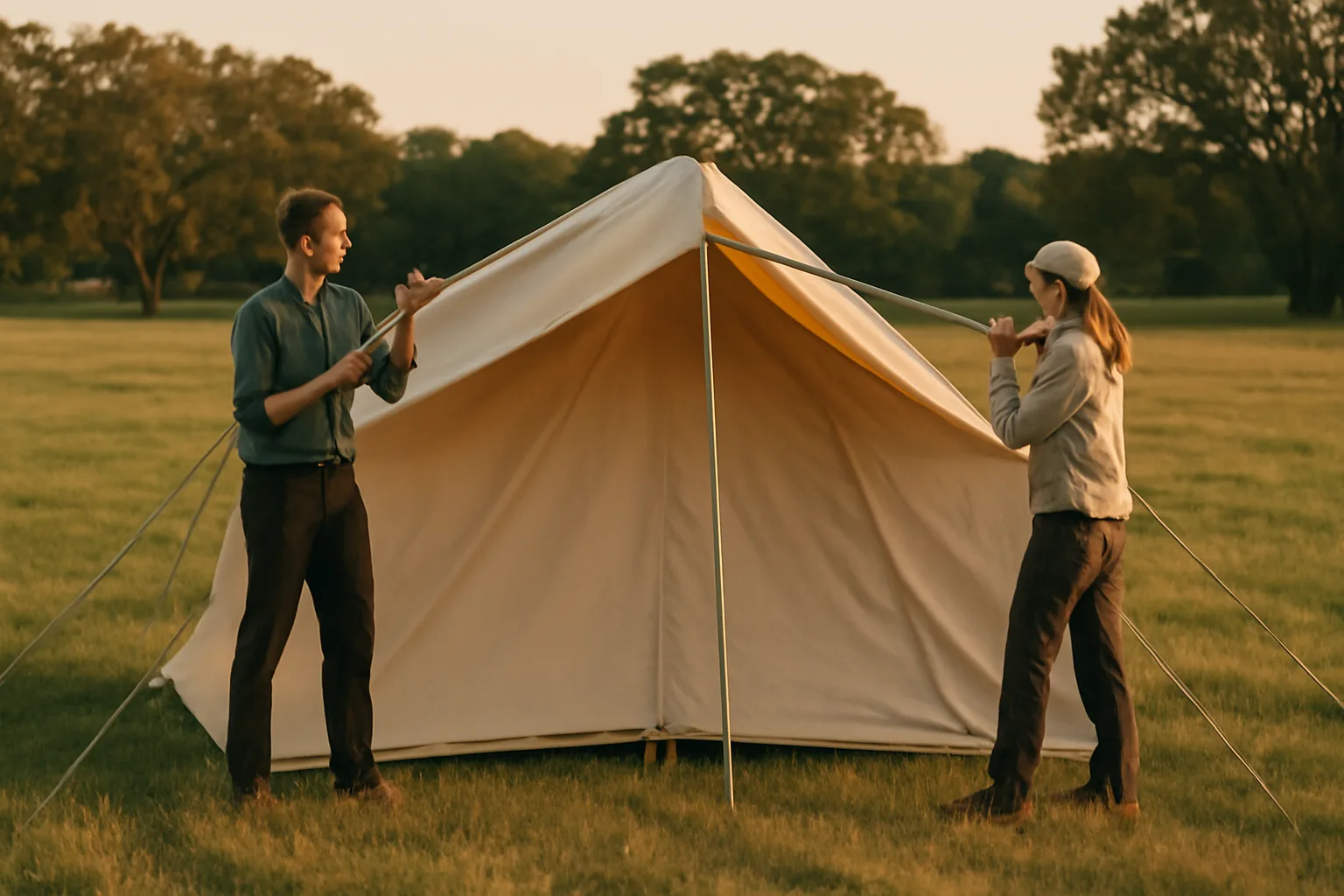
Tent rental is a service business that delivers a tent you own, puts it up, then takes it back and bills for the time. Clients pay for cover and labor, not for a keepsake. Most shops also send tables and chairs because a bare top is a hard sell on a Saturday.
Census NAICS 532289 (All Other Consumer Goods Rental) is the closest common federal box for consumer event rental shops that do tent work [11]. That line also holds other consumer rentals, so it is a messy fit. Heavier clearspan fleets sometimes get coded with commercial equipment rental. Nobody publishes a clean public split of tents-only firms.
The product is fabric, frame or poles, stakes or ballast, and a crew that can leave a structure standing. A 20 by 20 backyard frame is tent rental. A 40 by 100 with walls and a dance floor is still tent rental, and fire code treats it like a temporary building. Those are not the same job.
Pole tents use center poles and a lot of stake line. Frame tents stand on a metal skeleton and can sit on ballast when you cannot stab a lawn. Clearspans are the big engineered boxes. Sailcloth is a look. Each one fails in wind in a different way.
People mix this up with party stores and with general contracting. You are closer to a mobile installer with a warehouse. Municipal parks, churches, and private yards are the usual sites. Some cities want a special event permit on top of the tent permit. Put in the contract who files and who pays the city. Confirm that fee with that city. Do not quote a number you saw in a group chat.
How do you start tent rental?
You start tent rental by locking the paper path first, then buying the smallest fleet that can take paid work. Form a business, get a free EIN from IRS, open a bank account, bind insurance, and walk your fire marshal's tent rules before you order vinyl.
SBA says the business structure you choose "influences everything from day-to-day operations, to taxes, to how much of your personal assets are at risk" [3]. I'd form an LLC in the state where you live and operate. Sole prop is cheaper on day one. It also puts personal assets next to a wind claim. Confirm formation fees with your secretary of state. Ignore blog fee tables.
Apply for an EIN on IRS.gov. IRS says an EIN is a nine-digit number in the format XX-XXXXXXX [6]. IRS also says, "Applying for an EIN is a free service offered by the Internal Revenue Service" [5]. Anyone charging you for that number is selling a form you can file yourself.
Then run the dull loop. Sales tax permit if your state taxes rental. A city business license if the city wants one. A yard that zoning actually allows. A conversation with the fire official who signs tent permits. If you will run a vehicle at 10,001 pounds GVWR or more in interstate commerce, FMCSA says you may need a USDOT number [7]. Confirm that with FMCSA, not a forum.
SBA's start sequence is the same boring list every other trade uses: structure, tax ID, licenses, then operations [4]. Inventory comes last. People invert this and sit on a trailer of vinyl they cannot put on a city park. State paths differ. Compare how to start tent rental in Alabama with how to start tent rental in Texas. The EIN step looks the same. The fire desk does not.
Do you need a special tent rental license?
No single federal tent rental license exists. What you need is a stack of ordinary business paper plus whatever your city, county, and fire official require for temporary membrane structures. Confirm every item with the board that issues it. Do not treat a national blog as the license.
Most shops need some mix of a state entity filing, a local business tax or privilege license, a sales tax account, and site-by-site tent permits. A contractor license is a different animal. Some states pull large tent installs toward contractor or specialty cards. Many do not. I would not assume you need a GC card, and I would not assume you do not. Ask the state contractor board and the local building official the same question and keep the emails.
Flame certificates travel with the fabric, not with a mystery "tent license." Insurance is not a license, though parks will ask for a certificate of insurance before they hand you a key. If you want the state-level paper spelled out, start with a real state page such as tent rental license in Alabama or tent rental license in California and then call the city anyway.
Home-based shops still trip zoning. A quiet trailer in a driveway is one thing. Staking practice in a cul-de-sac and a forklift on a residential lot is another. Confirm home-occupation rules with planning, not with your HOA rumor mill.
What fire and building permits do tents trigger?
Over 400 square feet, expect a fire permit. IFC 2021 section 3103.2 requires a permit from the fire code official for tents and membrane structures larger than 400 square feet [1]. That is the number I would memorize. The exceptions on your adopted code may fit, but assume you need the permit until an official tells you otherwise.
The 2021 International Fire Code states, "Tents and membrane structures having an area in excess of 400 square feet (37 m2) shall not be erected, operated or maintained for any purpose without first obtaining a permit and approval from the fire code official" [1]. There is a common exception path for some open-sided tents up to 700 square feet if clearances and other conditions are met. Your city may have amended that. Confirm the adopted edition and the amendments.
IBC 2021 section 3103.1.2 requires tents erected for less than 180 days to comply with the International Fire Code [2]. Past that window you are in temporary structure land under the building code, which is a different desk and often a different set of drawings. IBC 2021 says, "Tents and other membrane structures erected for a period of less than 180 days shall comply with the International Fire Code" [2].
Construction documents show up when the official asks for them. Big tents, sided tents, and anything near a public way get asked more. Flame propagation proof is not optional in IFC jurisdictions. The official will want a certificate that the fabric meets NFPA 701 test method 1 or 2, as the adopted IFC text requires. Carry current certs in the truck. A photo of a tag from 2014 is not a file.
Park departments and special-event offices stack their own permits on top. The fire stamp does not waive the park stamp. Budget time. I never promise a client a 48-hour city turnaround. Boards do not work on your Saturday.
How much money do you actually need to start?
Nobody has a good public dataset on tents-only startup cost. SBA and IRS do not publish a tent rental figure. Census NAICS 532289 mixes tent shops with other consumer rentals, so you cannot back a clean average out of that line [11]. Anyone quoting a single national number is guessing.
What you can price with a phone is the paper. Entity filing is a state fee. Confirm it with the secretary of state. An EIN from IRS is free [5]. Local business licenses vary by city. Insurance is the first real check, and the premium depends on fleet, payroll, and claims history. I will not invent a premium. Get two quotes from agents who already write event rental.
Inventory is the open-ended part. I'd rather start with two 20 by 20 frames, one 20 by 40, matching walls, a stake set you trust, and a trailer you can tow with a truck you already understand. A used commercial top with a current flame cert beats a new big-box "party tent" that fails the first inspection. Skip the clearspan until you have lost jobs because you did not have one.
Yard rent and a box truck eat cash before Saturday does. A lot of first-year shops run from a cheap industrial bay or a rural barn that zoning allows. Confirm use. Do not sign a five-year lease on a pretty showroom. Clients book from photos and a phone. They do not need your espresso machine.
What insurance should a tent rental shop carry?
Carry general liability, inland marine (or equivalent) on the gear, and auto on every vehicle that leaves the yard. If you have W-2 crew, add workers' compensation as your state requires. If the public walks into a showroom, think about the premises side too. That is the stack. Confirm limits with the venue, the park, and your agent. I will not invent a limit or a premium.
Parks and cities will ask to be additional insured. Build that into the quote process so you are not scrambling Friday at 4. Weather and wind exclusions matter more than the brochure's "events" wording. Read the form. A policy that loves indoor banquet chairs can still hate outdoor membrane structures.
Inland marine is how stolen or damaged tents get paid for when they are off your lot. Garage coverage on a pickup is not a fleet program. If a helper uses a personal truck, you have a gap. Fix it before the first load.
Do not treat a certificate of insurance as a permit. Officials still want the fire paper. Insurers still want you to follow the manufacturer install and the engineered wind plan. Those two files talk to each other when something goes wrong.
What tents should you buy first?
Buy commercial frame tents in sizes you can install with two or three people and a Saturday still left. I'd start with 20 by 20 and 20 by 40. Add a 20 by 30 if your market is backyard dinners. Match the walls. Match the crown and eave fittings so you are not mixing brands on a windy site.
Used is fine if the top has a current flame certificate and the frame is not banana-bent. I would walk away from a cheap peak tent sold for camping. Inspectors do too. Pole tents can be a bargain in grass markets with real stake length. They are a headache on asphalt. Do not let a pretty sailcloth photo set your first purchase. Sailcloth is a look you sell after you know ballast.
Stakes, pullers, and a sledge you can swing all day matter more than uplights. Buy a moisture meter habit for grass, and a way to count ballast in pounds, not in "a few barrels." Sidewall windows sell. Cheap sidewall that rips on the second wedding does not.
Clearspan and structure tents wait. They need more truck, more crew, and more engineering. Year-one shops that buy the cathedral they saw on Instagram sit on payments through January. Tables and chairs cash-flow. I would add those before a second color of top.
How do wind load stamps and flame certificates work?
A flame certificate tells the fire official the fabric meets the adopted flame test, usually NFPA 701 as referenced in IFC Chapter 31 [1]. A wind-load stamp is an engineer's drawing or letter that says how that tent is held down for a stated wind speed on a stated surface. They are not the same paper. Public sites often want both.
IFC jurisdictions commonly want the flame file before the permit is granted. Keep manufacturer certificates, lot numbers, and photos of sewn-in labels. If you recut or patch a top, ask the maker what that does to the cert. Guessing is how you fail a walkthrough.
Wind paper is local. Some officials want ASCE 7-based calcs for any sided tent. Some only ask when you are on pavement with barrels. Some want a site-specific letter. Confirm with the AHJ on that address. I do not promise a stamp will be accepted in the next county.
If you want a packaged wind-load and stamp workflow instead of assembling it from scratch, TentStakePath sells a $179 one-time Wind-Load + Stamp Kit. Use it as a paperwork aid. It is not an approval, and it does not replace the official who signs the permit.
Ballast math is where shops get sloppy. Water weight is not the number on the barrel if the barrel is half full. Stakes in wet clay are not stakes in dry sand. Follow the engineered plan. If the plan says you cannot install, you cancel. That call is cheaper than a claim.
How should you price a tent rental job?
Price labor, truck time, permit time, and risk, then add the cloth. A 20 by 20 in a flat backyard is not a 20 by 20 on a slope behind a museum. If you use a one-page national rate card, you will eat the hard jobs and lose the easy ones to whoever is cheaper.
I bid install hours first. Two techs, drive time, stake or ballast plan, and a weather hold. Then the permit line, billed as a pass-through plus your time at the counter. Then the gear day rate. Then damage waiver language that a human can read. Overnight Friday to Sunday is not the same as a four-hour ceremony.
Wind risk belongs in the contract. Spell out who decides a takedown. Spell out what happens if the city denies the permit. Spell out site access for a 24-foot trailer. Clients who cannot answer those questions are not ready to book.
Do not copy a competitor's website price. You do not know their truck note or their claim history. Raise prices when diesel, dump fees, or crew wages move. Say the number. People who need a tent this month can handle a clear quote.
What first-year paperwork is worth keeping?
Keep the entity docs, the EIN letter, insurance policies, every flame certificate, every engineered wind letter, every city permit, and every signed contract with a site sketch. Keep crew time records if anyone is not you. IRS Pub 583 is the starting-a-business companion I would actually open [14]. Confirm filing calendars with IRS and your state DOR.
A job file I like is one folder per event: quote, contract, COI requests, permit PDF, flame certs used, ballast or stake plan, photos of the finished install, and the pickup checklist. When something tears, you will want the photo from Saturday 10 a.m., not your memory.
Sales tax on rental is a state question. Some states tax the tent. Some tax labor differently. Some exempt nonprofits if they hand you a certificate. Confirm with the state department of revenue. Do not copy a shop in the next state.
If the public enters your warehouse or showroom, Title III of the ADA applies to places of public accommodation [12]. That is access and policy, not a tent stake pattern. Confirm what your space actually is. A locked barn that clients never visit is a different fact pattern than a counter on Main Street.
Can you hire crew as 1099 contractors?
Maybe for a true independent rigger who brings their own crew and methods. Probably not for the same three people you text every Friday, dress in your shirts, and direct on the eave. IRS uses a common-law test around behavioral control, financial control, and the relationship [10]. A label on an invoice does not win that test.
If they are employees, FLSA overtime rules apply to most nonexempt crew. DOL Fact Sheet 23 states that covered, nonexempt employees generally receive overtime of at least one and one-half times their regular rates for hours over 40 in a workweek [9]. Saturday double-headers blow past 40 fast. Pay it or staff it.
OSHA still expects a hazard assessment and PPE for the work you control. 29 CFR 1910.132 is the general PPE rule [8]. Hard hats when frames go up, gloves, eye protection, and a plan for heat on asphalt in July. NIOSH treats outdoor heat as a real occupational hazard, not a toughness contest [13]. Water and shade are cheaper than an ambulance.
Workers' comp is a state statute question once you have employees. Some states require it at the first W-2. Confirm with your state workers' compensation agency. Do not take a forum's headcount trigger as law.
How do state rules change the plan?
The entity and EIN steps look similar in every state. Fire desks, sales tax, contractor boards, and home-yard rules do not. California flame and listing habits are not Alabama's. Texas lets a lot of this live at the city. Tennessee's path is its own stack. Read a state guide, then call the city that owns the park.
If you are actually launching, use a state page and ignore national myth. Start with how to start tent rental in California, how to start tent rental in Tennessee, or how to start tent rental in Colorado. License detail lives on pages like tent rental license in Tennessee. Those pages still cannot sign your permit. The local official can.
Adopted code editions drift. A city on IFC 2018 and a city on IFC 2021 will not quote the same exception. Always ask which edition and which amendments. I write the edition on the job file. It saves an argument in the field.
Multi-state weekend work is how shops accidentally trigger USDOT and foreign-entity filings. If the truck crosses a state line at 10,001 pounds or more, read the FMCSA trigger again [7]. If you keep a second yard, you may need to register the LLC as a foreign entity. Confirm with both secretaries of state.
What is a waste of money in year one?
A new clearspan, a wrapped sprinter, a franchise, and paying a website to file your free EIN are wastes. Custom sailcloth before you have ballast discipline is a waste. A downtown showroom lease is a waste. LED uplights on every upright can wait until the tents are booked.
What I would spend on is insurance, flame-clean tops, stakes that do not bend, a trailer that does not sway, and time at the fire counter. A second cheap 20 by 20 that you can actually staff beats one cathedral you cannot. Software can be a shared calendar and an invoice tool. You do not need a custom app.
Training is not a waste. Manufacturer install classes and a day with someone who has pulled stakes in your soil will save a season. YouTube is not a wind plan.
TentStakePath is an independent publisher, not a law firm and not a service company. If you want the kit path after you have read the code, start at /start. Confirm every fee, quota, and processing time with the board that collects it. Nobody here can approve a tent.
Frequently asked questions
What is tent rental?
Tent rental is short-term hire of a tent you own, deliver, install, and remove. Clients pay for cover and labor. Most shops also rent tables and chairs. Census often files consumer event rental under NAICS 532289, which is a mixed category, not a tents-only line. Fire code treats larger tents as temporary membrane structures.
How do you start tent rental?
Form an entity, get a free IRS EIN, open a bank account, bind liability and gear insurance, then confirm fire and city permits before you buy vinyl. SBA treats structure choice as a tax and liability decision. No national tent license exists. Walk the local fire official's rules, then buy the smallest commercial frames you can staff.
Do I need a contractor license to rent tents?
Often no, sometimes yes. Many cities treat tent work as a permitted temporary structure, not as general contracting. Some states pull large installs toward a contractor or specialty card. Ask the state contractor board and the local building official the same question and keep the written answer. Do not guess from a national forum.
How big can a tent be without a fire permit?
Under the 2021 IFC, tents and membrane structures over 400 square feet generally need a fire code official permit. Some open-sided tents can qualify for a 700 square foot exception if listed conditions are met. Your city may have amended that. Confirm the adopted edition. Recreational camping tents are a different exception.
Is NFPA 701 flame certification required?
In jurisdictions that adopt IFC Chapter 31, officials commonly require a certificate that tent fabric meets NFPA 701 flame propagation criteria before they grant a permit. Keep current manufacturer certificates and sewn-in labels with the job file. A faded tag photo from a prior owner is a weak file. Confirm the exact test method the official wants.
Can I run tent rental from my house?
Sometimes, if zoning and the HOA allow a home occupation and you are not turning a cul-de-sac into a yard. A trailer in a driveway is different from staking practice and forklift traffic. Confirm with planning and zoning. Insurance and neighbors will notice the Saturday load-outs either way.
Do I need a CDL or a USDOT number?
A CDL depends on vehicle class and state rules, not on the word tent. A USDOT number is a federal interstate trigger. FMCSA says many vehicles used in interstate commerce at 10,001 pounds GVWR or more need a USDOT number. Confirm both with FMCSA and your state DMV. Do not trust a truck-group rumor.
How long can a rental tent stay up?
IBC 2021 sends tents up less than 180 days to the International Fire Code. Past that window you are in temporary structure territory under the building code, which often means more drawings and a different desk. Local amendments can shorten that. Confirm the clock with the building and fire officials on that site.
Do I charge sales tax on tent rental?
That is a state department of revenue question. Many states tax tangible rental. Some treat labor differently. Some exempt a nonprofit that gives you a valid exemption certificate. Confirm the taxability of tent rental and of install labor in your state. Do not copy a shop across the state line.
Do I need workers' comp if I have no employees?
If you are truly alone, many states do not force a workers' comp policy on a single owner. The moment you have W-2 crew, most states do. 1099 labels do not decide that. Confirm the headcount trigger with your state workers' compensation agency. Insurers may still want a policy if venues require it.
Are water barrels enough ballast?
Only if the engineered wind plan says they are enough, at the actual filled weight, for that tent, those walls, and that wind speed. A half-full barrel is not the number in the catalog. Stakes in real soil often hold better than barrels on a calm day and fail differently in a gust. Follow the stamp. Cancel if you cannot meet it.
What first purchase is the worst idea?
A new clearspan or a custom sailcloth set before you have crew, ballast discipline, and a fire-desk relationship. Those products need more truck, more paper, and more skill. Two commercial 20 by 20 frames with current flame certs will take paid work. A cathedral you cannot staff will take payments all winter.
Is tent rental only a summer business?
In cold states the peak is real and January is quiet. In warm states you can book year round if you own sidewalls and a heat or fan plan the fire official accepts. Off-season is when you restock flame files, service frames, and rewrite contracts. Do not size the fleet for one October weekend.
Sources
- ICC International Fire Code 2021, Chapter 31 Tents and Other Membrane Structures: IFC 2021 3103.2 requires a fire code official permit for tents and membrane structures larger than 400 square feet, with stated exceptions.
- ICC International Building Code 2021, Chapter 31 Special Construction: IBC 2021 3103.1.2 requires tents and other membrane structures erected for less than 180 days to comply with the International Fire Code.
- U.S. Small Business Administration, Choose a business structure: SBA states that business structure influences day-to-day operations, taxes, and how much personal assets are at risk.
- U.S. Small Business Administration, 10 steps to start your business: SBA's start sequence covers structure, tax ID, licenses, and related setup steps used by new firms.
- IRS, Apply for an Employer Identification Number (EIN) online: IRS states that applying for an EIN is a free service offered by the Internal Revenue Service.
- IRS, Employer ID numbers: An EIN is a nine-digit IRS number in the format XX-XXXXXXX.
- FMCSA, Do I need a USDOT number: FMCSA requires a USDOT number for many interstate commercial vehicles with GVWR or GCWR of 10,001 pounds or more.
- OSHA, 29 CFR 1910.132 Personal Protective Equipment: OSHA 1910.132 requires employers to assess workplace hazards and provide appropriate PPE.
- U.S. DOL Wage and Hour Division, Fact Sheet 23 Overtime Pay Requirements: FLSA generally requires overtime of at least 1.5 times the regular rate for nonexempt employees after 40 hours in a workweek.
- IRS, Independent contractor (self-employed) or employee: IRS classifies workers using a common-law test of behavioral control, financial control, and type of relationship.
- U.S. Census Bureau, NAICS 2022 details for 532289: NAICS 532289 covers establishments primarily engaged in renting consumer goods, the common federal box for many event rental shops.
- ADA.gov, Title III of the ADA: ADA Title III prohibits disability discrimination in the activities of places of public accommodation.
- CDC NIOSH, Heat stress: NIOSH treats occupational heat exposure as a hazard for outdoor workers and publishes prevention guidance.
- IRS Publication 583, Starting a Business and Keeping Records: IRS Pub 583 is the Service's guide to starting a business and keeping records, including EIN and recordkeeping basics.