Last updated 2026-08-19
TL;DR
Tent rental is the short-term hire of frame, pole, or stretch tents plus the crew that stakes them. You start with an entity, a free IRS EIN, liability insurance, and fire permits for tents over 400 square feet under the International Fire Code. Confirm every local fee with the relevant board. Year one is paper, a truck, and two sizes you can stake, not a warehouse of vinyl.
What is tent rental?
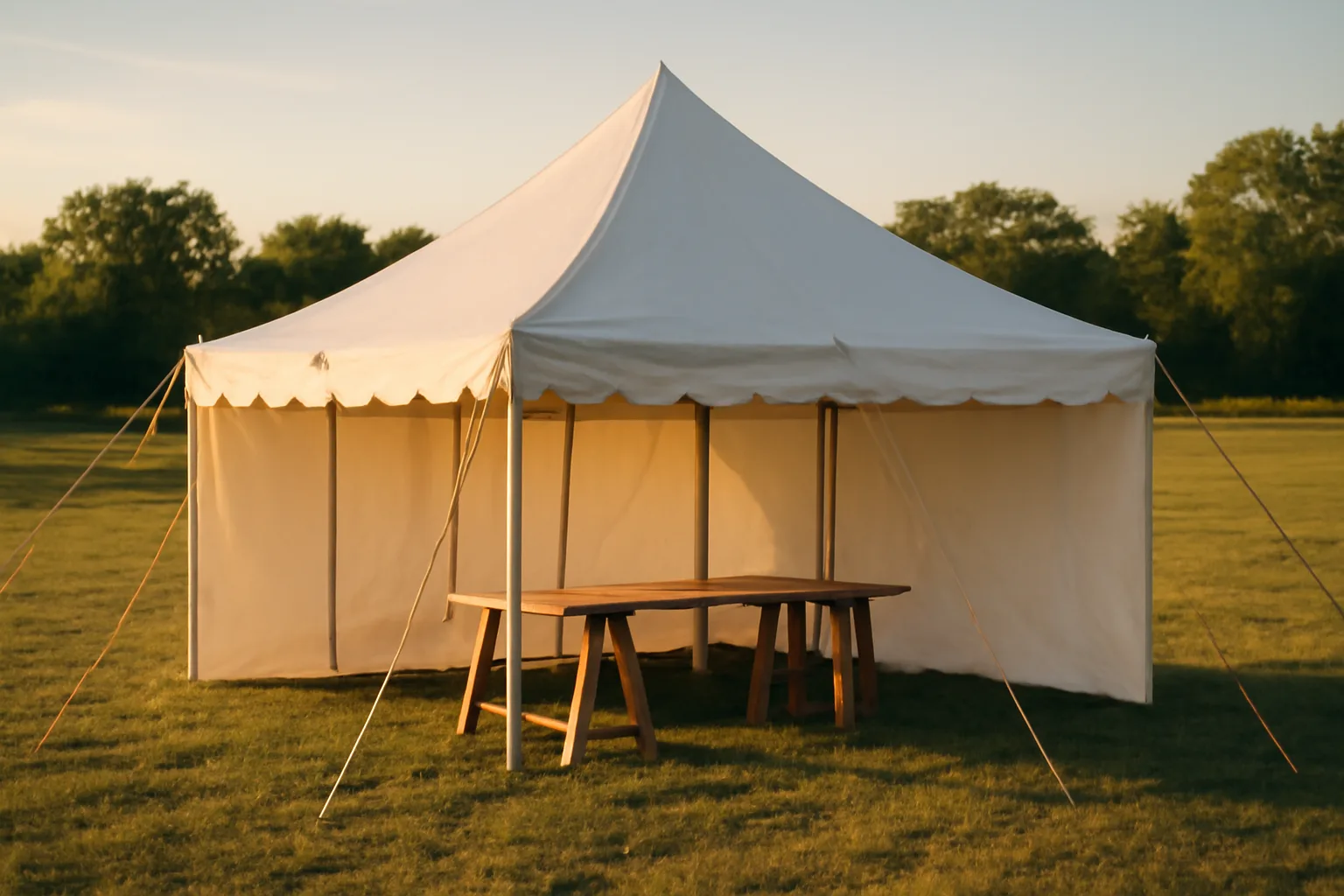
Tent rental is the short-term hire of temporary membrane structures and the crew that installs them. You rent frame tents, pole tents, sailcloth, or clearspan structures, then you stake or ballast them, hang sidewalls, and take the whole thing down after the event. The customer pays for time, labor, and risk. Not for a photo.
A backyard 20x20 is still tent rental. So is a 40x80 over a catering line. The work is one family: fabric, aluminum or steel, stakes or weights, and a weather call-off if the wind gets stupid.
Census files a lot of this inventory under NAICS 532289, All Other Consumer Goods Rental. Some mixed shops use 532310, General Rental Centers. Nobody has a clean national headcount of tent-only firms. The closest official box is that rental code, not a special tent-contractor NAICS. [10]
You sit closer to a temporary-structure contractor than to a DJ. The International Building Code treats membrane structures as construction. The International Fire Code treats tents as something you permit. That is the paper path. If you only think party rental, you will miss fire permits, flame certificates, and wind. [5][6]
I would not romanticize it. Wet vinyl is heavy. Saturday load-outs run late. You will argue about unmarked utilities and soft lawns. The money is in repeat planners and clean installs, not in owning every color of drape.
Pole tents need guy-line room. Frame tents sit on a skeleton and fit tight patios. Clearspans cost more and need a crew that knows beams. Stretch looks expensive in photos and punishes sloppy ballast. Pick one family for year one.
If you want the shorter paper-path version, read what tent rental is and how you start the paper path.
How do you start tent rental?
You start tent rental by building the paper file first, then buying only the tents you can install with the people you actually have. Form a state entity, get a free IRS EIN, open a dedicated bank account, place general liability insurance, and ask the local fire official how they permit tents before you take a deposit. [1][3][4]
That order is boring. It is also how you avoid a first job you cannot legally invoice.
Here is the sequence I would actually run. Check the name with your state business filing office and form an LLC or corporation if that is what your accountant wants. The SBA walks through sole props, partnerships, LLCs, and corporations without picking one for you. [3] Apply for an EIN on IRS.gov. The Service says that application is free. [1] Register for state sales and use tax if your state taxes rental of tangible property. Confirm that with the state revenue department, not a blog. Get a local business tax certificate if the city requires one. Call the fire marshal about operational permits. Buy insurance that names tents and install labor, not a generic homeowner rider. Then buy used or new inventory that matches jobs you can reach in one truck.
Do not wait for a mythical national tent license. There is not one. There is a stack of local paper. How to start tent rental and what the work really is covers the labor side in more detail.
Skip the warehouse tour until the EIN letter and the insurance binder exist. I have watched people finance a 40x60 before they had a contract template. That is a waste of a good line of credit.
How big can a tent be before you need a fire permit?
Under the 2021 International Fire Code, tents and membrane structures over 400 square feet need a permit and approval from the fire code official, unless an exception applies. That 400 square foot line is the number most adopting towns start from. [5]
The code text is blunt. IFC 2021 Section 3103.2 says: "Tents and membrane structures having an area in excess of 400 square feet shall not be erected, operated or maintained for any purpose without first obtaining a permit and approval from the fire code official."
There is a widely used exception for tents open on all sides. Individual open-sided tents up to 700 square feet can fall outside the permit trigger if they also keep the 12 foot clearance the code lists. Multiple tents shoved together without that break can get counted as one area. Read the exception. Do not guess. [5]
Your city may have adopted IFC 2018, 2021, or 2024, or a state fire code with amendments. Some jurisdictions permit every tent on public property. Some ignore backyard 10x10 pop-ups and still want paper on a 20x40. A 20x20 is 400 square feet on the nose. Treat 400 as the ask-the-marshal line, not as a dare.
Flame propagation certificates from the fabric maker belong in the same folder as the permit. IFC Chapter 31 also hits exits, smoking, heating equipment, and combustibles. IBC Chapter 31 is the building-code cousin for membrane structures. [6]
Confirm the adopted code edition and the fee with the fire prevention office. Nobody here can quote your town's current permit price.
Do you need an EIN and a legal entity first?
You need an EIN the moment you want a business bank account, a W-9 that is not your Social Security number, or employees. You can apply on IRS.gov at no charge. The IRS warns that other sites charge for the same free form. [1]
IRS language is clear. The Service says: "Applying for an EIN is a free service offered by the Internal Revenue Service. Beware of websites on the Internet that charge for this free service."
Form SS-4 is the paper version if you cannot use the online assistant. [14]
A sole prop can exist without an LLC. Plenty of first-year tent people start that way. I still want the LLC (or a corporation) before a tent is on someone else's lawn, because a stake through an unmarked line is a lawsuit shape. The SBA structure page is a decent map of tax and liability tradeoffs. It is not legal advice. [3] State formation fees change. Confirm the current filing fee with the secretary of state.
Get the federal EIN, then the state tax ID if your revenue department issues one. SBA summarizes that two-step. [4] After that, keep books. IRS Publication 334 is the small-business tax guide you will actually open in April. [11]
IRS self-employment tax is 15.3 percent, made of 12.4 percent Social Security and 2.9 percent Medicare (IRS self-employment tax page). [2] That number surprises people who priced a 20x20 like a hobby.
What licenses and local permits does tent rental need?
Tent rental needs a pile of local paper, not one federal tent license. Expect some mix of a state entity filing, a sales tax permit, a city or county business license, a fire operational permit on larger tents, and site-specific park or right-of-way permits when you set on public land.
I cannot honestly list a single national fee. Processing times sit with the agency that stamps the form. Confirm every dollar with the relevant board.
Fire is the one that bites new shops. IFC Chapter 31 is the model most towns start from. Your marshal may also want a site plan, occupant load, and exit widths. Special events on city property often add a separate permit from parks or the clerk. Private backyards still trip utility-locate rules. Call 811 before you drive long stakes. [5]
Heat, cook, or run a generator under fabric, and the fire official will have more to say. Block a sidewalk, and public works joins the file.
Seller's permits matter because many states tax rental of tangible personal property. Some tax the labor, some do not. That split is why you confirm with the state department of revenue, not with a Facebook group.
For a state-shaped cost walk, start with tent rental cost in california, tent rental cost in florida, or tent rental cost in alabama. Those pages stay in the paper weeds.
The tent rental guide for licenses, tents, and year one is the companion if you want another pass on the same stack.
What insurance do tent rental companies actually carry?
A working tent shop carries commercial general liability, inland marine or a floater on the tents themselves, commercial auto on the truck, and workers' compensation once you have employees your state covers. Some venues also demand an additional insured endorsement and a waiver of subrogation on every certificate.
I will not invent a premium. Rates move with claims, wind territory, and whether you install or only drop-and-go. Anyone quoting one national average GL cost is guessing.
Ask the underwriter out loud: does this policy cover collapse, stake damage to underground utilities, and injury during install? A cheap policy that treats you like a florist is a waste of money. Tell them you drive steel into lawns.
Inland marine is what pays when a frame walks off a site or a pole tent shreds in storage. Auto is what you need the day a sidewall bin hits a parked car. Workers' comp rules are state statutes. Confirm coverage thresholds with your state workers' compensation agency.
Venues will send a certificate request late in the week. Build a habit of sending COIs the same day you take the deposit. Keep the declarations page in the same folder as the flame certs.
If a planner asks you to name a hotel as additional insured, that is normal. If they ask you to hold them harmless for their own stage, have a lawyer read it. I am not that lawyer.
Umbrella policies wait until the GL limit and the real job size justify them. Year-one shops that buy a huge umbrella before they have a second tent are buying comfort, not a limit anyone asked for.
What equipment should you buy in year one?
Buy a small set of frame tents you can raise with one helper, a stake kit that matches soil you actually see, a mechanical puller, sidewalls, a reliable truck, and enough ballast for the patios where stakes are banned. That is a shop. That is not a catalog.
Start with two or three sizes that share fittings. A 20x20 and a 20x30 that use the same parts beat a random 40x60 you cannot stand up on a Tuesday with two people. Used commercial frames from a closing shop beat pretty imported vinyl with no flame cert.
Skip sailcloth, stretch, and lighting packages until you have a season of installs. Those lines photograph well and punish sloppy ballast. Clearspan is a different trade. Do not finance it because a competitor's feed looks busy.
Tools that earn: a walk-behind stake driver or a good sledge and driving cap, a puller that will not destroy the stake head, marking paint, a long tape, load-rated straps, and gloves you will actually wear. OSHA's PPE rule in 29 CFR 1910.132 says you assess hazards and provide the gear. [12] Gloves, eye protection, and boots are the boring minimum.
A second cheap trailer before you have a second crew is a waste. So is custom print on vinyl you will grind on asphalt.
Read tent rental guide for first jobs, permits, and paper before you click buy on a mixed lot of poles.
How much does it cost to start tent rental?
There is no honest single national startup number. A person with a truck, a used 20x20, and an LLC filing lives in a different world from a shop that buys a new clearspan and a box truck on a note. Anyone selling you a fixed turnkey figure is selling a package, not a measurement.
What you can pin down is the federal paper that is free or formula-based. The IRS EIN is $0. [1] Self-employment tax is 15.3 percent of net earnings from self-employment. [2] State formation fees, local business taxes, fire permit fees, and insurance deposits change by board and by year. Confirm those. Do not take my word for a dollar amount I cannot see.
Inventory is the swing item. Used commercial frame tents show up at auction and on industry boards. New commercial tents cost more and arrive with current flame documentation, which fire marshals like. Cheap consumer pop-ups are not a rental fleet. They fail in weather and they fail inspection.
Truck and fuel will outrun tent payments if you chase 80 mile gigs for a 20x20. Draw a service radius on a map and stay inside it for year one.
For more first-year paper budgeting, use tent rental guide 100 for first-year paper and permits. State pages help when you need local cost texture, not a national myth.
What paper do you keep for first-year jobs?
Keep a contract, a site sketch, a wind and weather call-off clause, the fire permit, flame certificates, the COI, a utility-locate confirmation, an invoice, and the tax records Publication 334 tells you to keep. [11] That folder is the job.
The contract should say who locates utilities, who supplies ballast when stakes are refused, who decides a weather cancel, and when the balance is due. Soft language like we will see about the wind is how you work a Saturday for free.
Flame certificates travel with the tent. Marshals ask. If you bought used and the cert is missing, get a replacement from the manufacturer or stop selling that top as a permitted unit.
IFC Chapter 31 is the checklist hiding in plain sight: exits, combustibles, heating, occupancy. [5] Print the adopted chapter for your town and mark the sections that match your sizes.
Sales tax exemption certificates from nonprofits belong in the same file if you honored them. IRS Pub 334 will not save a sloppy exemption file in an audit. [11]
Photos of the finished install (and of the empty lawn after strike) settle more deposit fights than any review. Take them.
ADA is not a tent-rental myth. If you install for a place of public accommodation or a public entity, accessible routes and the 2010 ADA Standards can enter the conversation. A private backyard wedding is a different fact pattern. Read the Standards when the client is a city or a venue, not when you feel like arguing online. [13]
How do wind loads and engineering stamps work?
Wind is why tents fail, and it is why some building or fire officials ask for manufacturer ratings or a stamped drawing. Model building codes pull wind design through the IBC. IBC Chapter 31 covers membrane structures. Your local official decides when a rental tent needs more than the catalog sheet. [6]
I do not have a national table of this mph means you strike. Fabric, geometry, open walls, and ballast change the number. Manufacturer install manuals list a maximum wind for the configuration. Follow the stricter of the manual and the AHJ. If the forecast is ugly, cancel. A deposit is cheaper than a flying frame.
Stamped engineering shows up on larger tents, on public property, on multi-day installs, and in towns that got burned by a collapse. You will not talk a cautious marshal out of a stamp with a smile. Budget time. Confirm whether they want a local engineer or the manufacturer's engineered package. Never invent an approval timeline.
If you want a single packet of wind-load language and stamp checklists, TentStakePath sells a $179 one-time Wind-Load + Stamp Kit at /start. You can ignore the kit and still use this guide.
Guy lines, stakes, and water barrels are not interchangeable. A patio job that cannot be staked is a ballast job. If you do not own the weight, do not take the job.
What labor and truck rules hit a small tent shop?
If you have non-exempt employees, federal overtime is time and one-half after 40 hours in a workweek under the Fair Labor Standards Act. Weekend weddings do not reset that clock. [8] State wage orders can be stricter. Confirm with your state labor department.
You, the owner, on a Schedule C, pay that 15.3 percent self-employment tax instead of splitting FICA with a boss. [2]
Crews work heat. OSHA's heat-exposure page tells employers to plan water, rest, and shade for outdoor work. Treat that as the baseline, not as optional summer color. [9] 29 CFR 1910.132 still wants a PPE assessment. [12]
Trucks cross a federal line at weight. FMCSA says you need a USDOT number when you operate in interstate commerce with a vehicle that hits 10,001 pounds GVWR (or the other listed triggers). [7] In-state only rules sit with your state DOT. A loaded stake bed gets heavy faster than people think. Weigh it.
A commercial driver's license is about the vehicle class and the weight, not about carrying tents. FMCSA's CDL page is the federal map. States issue the license. Confirm class with your DMV before you buy a bigger truck. [15]
Do not put a new helper on a heavy sledge in July without water and a rotation. That is not softness. That is how you keep the only two people who know your inventory.
What should you skip in year one?
Skip national franchise myths, skip buying every size, skip a custom app, and skip any coach who promises a packed calendar before you have a fire-permit workflow. Year one is repeats, clean lawns, and paper that matches the install.
A full line of linens, chargers, and lounge furniture looks like revenue and turns into a storage tax. Add a second product only when a real planner asks twice.
Do not take a job you cannot cancel for wind. Do not stake without a locate. Do not quote a 40x80 on a slope you have not walked.
Next steps are dull and correct. Finish the entity and the EIN. Bind insurance. Call the fire official with your actual sizes. Write the contract. Buy two tents that share fittings. Do ten jobs inside a tight radius. Then decide if you want a third size.
Variable fees, quotas, and processing times are the board's to state. TentStakePath is an independent publisher, not a law firm and not a service company. Confirm the current number with the agency that cashes the check.
If you want another pass on first-year paper, use tent rental guide 100 for first-year paper and permits.
Frequently asked questions
What is tent rental?
Tent rental is paid, short-term use of a tent plus install and strike labor. Shops hire out frame, pole, sailcloth, or clearspan units with sidewalls, stakes, or ballast. Census often codes the inventory to NAICS 532289. You are selling a temporary structure that fire and building codes treat as real construction, not a party favor.
How do you start tent rental?
Start on paper. Form a state entity if you want the liability box, apply for a free IRS EIN, open a business bank account, bind general liability that covers install work, and ask the local fire official how they permit tents over 400 square feet. Then buy two sizes you can install with the people you have. Confirm every local fee with the board that charges it.
Do I need a contractor license for tent rental?
There is no single federal contractor card for tents. Some states and cities fold large membrane work into contractor or special-event rules. Most first-year shops hit business licensing, sales tax permits, and fire operational permits first. Ask the contractor board and the fire marshal in the towns you will actually work. Do not assume a neighboring county's answer travels.
Is a 20x20 tent over the fire permit size?
A 20x20 is 400 square feet. IFC 2021 Section 3103.2 triggers a permit for tents and membrane structures in excess of 400 square feet, with listed exceptions (including some open-sided tents up to 700 square feet). Your town may have adopted a different edition or tighter local rule. Treat 400 as the call-the-marshal line and confirm the adopted code.
Can I run tent rental as a sole prop?
Yes. A sole prop can invoice, get an EIN, and file Schedule C. I still prefer an LLC or corporation before steel goes into someone else's lawn, because underground damage and collapse claims are ugly. The SBA structure page maps the tradeoffs. State formation fees change, so confirm the current amount with the secretary of state.
Do I need a CDL to haul tents?
Not because the cargo is tents. A CDL depends on vehicle class and weight under FMCSA rules and your state DMV. A USDOT number can apply in interstate commerce at 10,001 pounds GVWR and other listed triggers. Weigh the loaded truck. Confirm class before you buy a bigger bed. In-state-only hauls follow state DOT rules.
What NAICS code is tent rental?
Many event tent shops sit in Census NAICS 532289, All Other Consumer Goods Rental. Mixed rental yards sometimes use 532310, General Rental Centers. There is no dedicated tent-only NAICS. Use the code that matches how you actually earn, then keep it consistent on tax and license forms. Confirm with your accountant if a bank or insurer asks.
Do employees get overtime on weekend installs?
If they are non-exempt under the Fair Labor Standards Act, yes, overtime is time and one-half after 40 hours in a workweek. A Saturday wedding does not start a new clock. Some states add daily overtime or stricter wage orders. Confirm with your state labor department before you staff a holiday weekend with a handshake rate.
Are flame certificates required?
Fire officials commonly ask for the fabric maker's flame propagation certificate when they permit a tent under IFC Chapter 31. Used tops without paperwork are a headache. Get a replacement cert from the manufacturer or stop sending that unit to permitted jobs. Keep a copy in the truck and another in the job folder with the permit.
Can I refuse a job for wind?
Yes, and you should write that right into the contract. Manufacturer manuals list configuration limits. Local officials can be stricter. There is no honest national mph table that covers every frame, open wall, and ballast setup. Cancel when the forecast and the manual disagree with the party plan. A lost deposit is cheaper than a flying frame.
Do I collect sales tax on tent rental?
Many states tax the rental of tangible personal property, which can include tents. Labor, delivery, and permit pass-throughs are treated differently by state. Some nonprofit clients hand you exemption certificates you must keep. Confirm the current rule and rate with your state department of revenue before you print a price list. Do not copy a rate from another state.
What is a membrane structure?
In the IBC, a membrane structure is a building or portion of a building with a membrane (fabric or similar) as the roof, wall, or both. Rental tents sit in that family even when they are temporary. That is why building and fire officials talk about exits, loads, and permits instead of party decor. Read IBC Chapter 31 next to IFC Chapter 31.
How soon can I take my first deposit?
After you can legally invoice and insure the job, not after you liked a tent online. I would wait until the EIN, the bank account, the liability binder, and a written contract exist, and until you have asked the fire official about the size you plan to sell. No one can promise you a processing time on local paper. Confirm with the board.
Where do I confirm local tent permit fees?
Call the fire prevention office in the city or county where the tent will stand, and ask which code edition they adopted and what the current operational permit costs. If the site is a park or street, ask parks or public works too. Fees change. This site will not invent your town's number. Get it from the office that cashes the check.
Sources
- IRS, Apply for an Employer Identification Number (EIN) Online: Applying for an EIN is a free IRS service; other websites may charge for the same filing.
- IRS, Self-Employment Tax (Social Security and Medicare Taxes): The self-employment tax rate is 15.3 percent (12.4 percent Social Security and 2.9 percent Medicare).
- U.S. Small Business Administration, Choose a business structure: SBA outlines sole proprietorship, partnership, LLC, and corporation options for new firms.
- U.S. Small Business Administration, Get federal and state tax ID numbers: New businesses obtain a federal EIN and, where required, a separate state tax ID.
- International Code Council, 2021 International Fire Code Chapter 31: IFC 3103.2 requires a permit for tents and membrane structures over 400 square feet, with listed exceptions including some open-sided tents up to 700 square feet.
- International Code Council, 2021 International Building Code Chapter 31: IBC Chapter 31 regulates special construction including membrane structures.
- FMCSA, Do I need a USDOT number?: A USDOT number is required for qualifying interstate commercial vehicles at 10,001 pounds GVWR and other listed triggers.
- U.S. Department of Labor, Fair Labor Standards Act: The FLSA requires overtime pay of at least one and one-half times the regular rate after 40 hours in a workweek for covered non-exempt employees.
- OSHA, Heat exposure: OSHA publishes heat illness prevention guidance for outdoor work, including water, rest, and shade practices.
- U.S. Census Bureau, NAICS 532289 All Other Consumer Goods Rental (2022): NAICS 532289 covers establishments primarily engaged in renting consumer goods, a common code bucket for party and tent rental inventory.
- IRS, Publication 334 Tax Guide for Small Business: Publication 334 is the IRS small-business tax guide covering records and filing for sole proprietors and similar filers.
- OSHA, 29 CFR 1910.132 Personal Protective Equipment: Employers must assess workplace hazards and provide personal protective equipment when required.
- U.S. Department of Justice, 2010 ADA Standards for Accessible Design: The 2010 ADA Standards set accessibility criteria that can apply when public entities or places of public accommodation use event sites.
- IRS, About Form SS-4: Form SS-4 is the application used to request an Employer Identification Number.
- FMCSA, Commercial Driver's License: CDL requirements are based on vehicle class and federal minimum standards administered by the states.